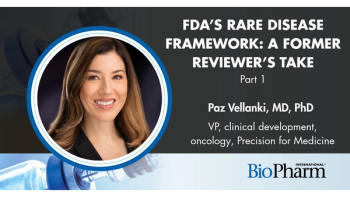
In the first part of a two-part interview, Paz Vellanki of Precision for Medicine explains what sponsors should bring to early FDA meetings and how manufacturing and assay readiness can delay rare disease trials.
FDA’s draft framework would let sponsors add patient-specific genome editing variants to an approved BLA using in vitro data. Here is what the guidance proposes, what evidence it asks for, and what remains unresolved.
FDA clears the IND for Biolojic Design’s BD200, an AI-designed Trop2/Nectin-4 multibody ADC; Blackstone Life Sciences agrees to provide Pfizer up to $1.5 billion to develop its monthly GLP-1 receptor agonist berobenatide; and enGene Therapeutics plans a year-end BLA for detalimogene voraplasmid in BCG-unresponsive non-muscle invasive bladder cancer.
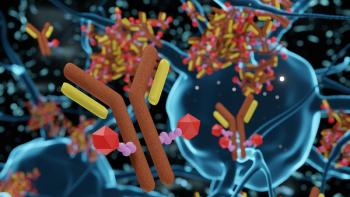
FDA has cleared Biolojic Design’s IND for BD200, a bispecific antibody-drug conjugate targeting Trop2 and Nectin-4 whose arms can each bind either target. A global Phase 1 study in solid tumors is expected to begin in the coming weeks.
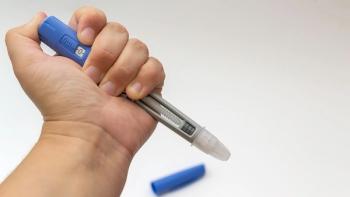
Blackstone Life Sciences will fund up to $1.5 billion of development costs through 2028 for Pfizer’s monthly GLP-1 receptor agonist berobenatide, in exchange for milestone payments tied to approval and sales. Pfizer keeps full control of the program.
ImvivaBio’s off-the-shelf CD19/BCMA CAR-T cell therapy CTA313 kept 88% of evaluable patients with refractory lupus in DORIS remission at Month 12, according to longer-term phase 1 data presented at ACR Convergence 2026.
Full phase 3 OASIZ-301 results show both dosing regimens of Amgen’s CD40L antagonist fusion protein dazodalibep reduced systemic disease activity in Sjögren’s disease at Week 48. The every-four-weeks dose also improved patient-reported dryness.