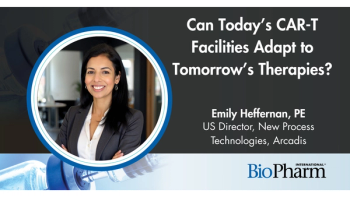
Emily Heffernan of Arcadis explains how facility scale, equipment, containment, and quality testing differ across ex vivo cell therapy, viral vector, and mRNA-LNP manufacturing.
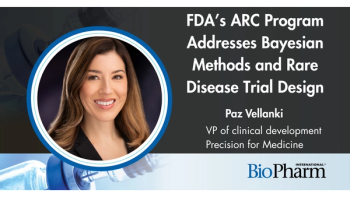
Dr. Paz Vellanki discusses Bayesian methods, challenges in developing rare disease endpoints, and why sponsors should engage FDA early in clinical development.
FDA expands Anktiva’s bladder cancer indication, Alvotech and Advanz submit a proposed Eylea 8 mg biosimilar in Europe, and Lilly reports new remission data for Omvoh in inflammatory bowel disease.
The FDA expanded ImmunityBio’s Anktiva plus BCG to include patients with BCG-unresponsive non-muscle invasive bladder cancer with papillary-only tumors, extrapolating efficacy from the QUILT-3.032 carcinoma in situ cohort.
The FDA expanded Fast Track status for invikafusp alfa, Marengo Therapeutics’ TCR Vβ-targeting antibody-IL-2 fusion protein, from TMB-H colorectal cancer to TMB-H solid tumors regardless of tissue of origin.
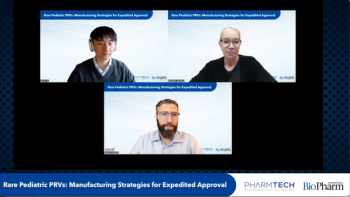
Nathan Edwards of Arya Consulting moderates a discussion with Elisabeth Gardiner of Tevard Biosciences and Donny Xu of the RTW Institute about rare disease treatment development and navigating the FDA’s Rare Pediatric Disease Priority Review Voucher Program.
The FDA launches a new rare disease development initiative, BioNTech’s BNT113 misses a progression-free survival endpoint, and Viking Therapeutics begins Phase III trials of its oral obesity candidate.
As ArsenalBio, TScan, Bristol Myers Squibb, and others abandon ex vivo programs for in vivo engineering, early clinical data and platform differences point to both the promise and the unresolved safety, manufacturing, and regulatory questions of generating CAR-T cells inside the body.