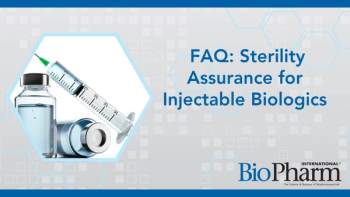
This FAQ explains how aseptic processing, contamination control, and validation protect patients amid sterile injectable failures.
A CPHI North America panel discussion forewarns that CDMO supply chains are potentially the biggest single risk to product resilience.
Ahead of a CPHI North America panel discussion—Redesigning the Supply Chain–The Road to Increased Resilience—led by Bikash Chatterjee, CEO of Pharmatech Associates, a USP company, Chatterjee forewarns that suppliers’ supply chain and continuous manufacturing and resilience issues are risks for contract development and manufacturing organizations (CDMOs) in the United States. While CDMO supply chains are potentially the biggest single risk to product resilience, they remain an area often overlooked by drug sponsors in partnering criteria, according to a CPHI press release.
Ahead of the conference, Chatterjee suggests that both CDMOs and sponsors need to be looking at their supply chain today to avoid the risks of tomorrow, due to the demand for services increasing at the same rate as US regulatory burdens. With many of the largest CDMOs now running at capacity, drug sponsors will need to focus on mitigating risk and building resiliency when using smaller or mid-sized CDMOs.
Continuous manufacturing and multi-tenant architectures for cross-party data sharing are two technologies that bode well for increased supply chain resilience. Chatterjee suggests that equipment for continuous manufacturing has advanced considerably and is now cost-effective and easier to operate in a PAT environment. Chatterjee also stated that 2023 is potentially the year that the risks manifest in some real-world supply chain problem within the US.
CPHI North America 2023 will bring thousands of pharma professionals from more than 80 countries to the Pennsylvania Convention Centre on April 25–27 to meet, connect, and attend conference sessions where leading CDMOs will seek to address capacity challenges and supply chain contingencies. It will run as a hybrid event, with its digital platform opening ahead of the in-person event and continuing for two months post-show.
Source: CPHI