Special PCs and smart programmable logic controllers (PLCs) are installed at the “edge” of the network to collect, process, and provide context to plant floor data, then send that data to the cloud for analytics. For a biopharma facility, this could be a device that sits in the purification area, connected to the PLC that controls the process. This edge device will collect data from the PLC and assign meaning to that data, including which plant, which area, which line, and which equipment the data are coming from. That contextualized data can be transmitted to the cloud for analytics leading to improvement of that purification process. Optimized recipe parameters could be sent to the edge device, then to the PLC for a better purification run on the next batch.
Connected sensors
Smart sensors can have a significant impact on a biopharma plant floor. For temperature-dependent process variables, smart temperature sensors can be connected directly to another device such as an anti-foam pump so that anti-foam is added proportional to the temperature profile that effects foaming, while also sending data to the cloud. Software can historize and analyze the data, recognizing patterns and issues within the datasets—and it does so significantly faster and with much more pattern-recognition capability than humans. The software could even order more anti-foam when needed. Sensor technology can be used to collect various data points, including pressure, turbidity, humidity, flow, and more.
Sensors connected to digitalization technologies can also provide essential real-time monitoring. This allows biopharma manufacturers to keep processes more effectively on track, especially when working with variables, such as total organic carbon, that are difficult-to-measure outside of the process in the lab. For inventory, smart shelves with embedded sensors can detect when materials on the shelves drop below a predefined number. When connected to an inventory management tool, smart shelves can initiate timely stocking and improve inventory visibility.
Vision systems
This technology uses cameras or sensors to identify or inspect critical information. In recent years, vision systems have become affordable and much easier to use, providing biopharma manufacturers with significant opportunities to improve production.
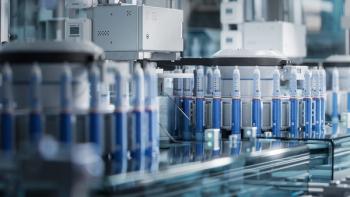
For example, a vision system added to a filling line can inspect product labels to ensure lot numbers and expiration dates are correct. The system can also identify labels that are incorrectly placed or are marred by smears or smudges. A vision system can also be used to determine if a bottle cap is cross-threaded. For instance, one camera with two different inspection criteria (height of cap in view vs. expected height can detect front-to-back variance, levelness can detect left-to-right variance) can identify a cross-threaded cap and immediately reject what could become a leaky cap in the field.
Advanced analytic tools for digitalization
Connected devices, such as sensors and vision systems, generate massive datasets when combined with integration of data collected from laboratory information management systems (LIMS) and more. Advanced tools such as artificial intelligence (AI) and machine learning (ML) assess and analyze the data for deep-dive insights, finding patterns and interrelationships or detecting process deviations that would be virtually impossible for a human to detect. These predictive analytics allow manufacturers to make necessary corrections or adjustments before the point of product failure.
The technology can also optimize the manufacturing process to save time, energy, and resources. For example, AI and ML have the potential to optimize a specific process beyond the capabilities of base digitalization technology, such as a manufacturing execution system.
Success with single-use systems
The rise of the single-use (SU) system has proven to be a game-changer in biopharma, and digitalization used in its production has demonstrated benefits to biopharma manufacturers as well as SU suppliers. In the past, bulk material—typically delivered to biopharma manufacturers in pails, drums, or super sacks—required quality assurance testing upon receipt before being subdivided and used in production. Now, materials are delivered in pre-weighed, single-use packages supplied with e-delivery of material documentation.
Because the material in that single-use product is only used for a given production run, the package’s traceable e-data can be automatically incorporated into upstream or downstream operations. The packaging also may allow for quick, nondestructive identification, such as Raman identification, which provides a rich dataset of raw material variability.
By working with SU suppliers, biopharma manufacturers can leverage a supplier’s available datasets without the need to build the database itself. The time savings can be significant. In one case study (conducted internally by Avantor), a manufacturer reduced the process of receiving and preparing production materials from 30 hours to nine.
Some SU suppliers are incorporating transformational technologies into their own processes. By moving beyond data aggregation to more connected operations, SU suppliers can automate data-driven decisions to efficiently advance their own production processes to meet biopharmamanufacturers’ needs.
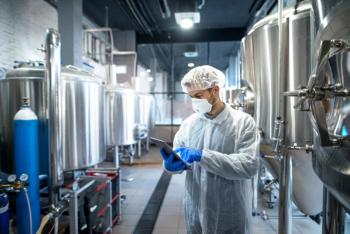
SU technology production requires the assembly of multiple types of tubing, connectors, sensors, and other components. Other factors impact manufacturing too, including the need to maintain production in cleanroom conditions by technicians wearing personal protective equipment. On-time production and delivery rely on these environments being fully stocked.
Tools such as smart buttons provide a single point of contact for onsite support teams to provide QC inspections or engineering support from outside the cleanroom. Use of smart shelves minimize stockouts and inventory discrepancies. Combined with AI and ML systems, this transforms human-driven inventory management to a data-driven process that generates savings and efficiencies in SU production and QC.
The future of digitalization
Smart technologies will continue to create opportunities for the biopharma industry. Consider digital twins, a modeling technology that uses AI or ML to virtually test improvements and outcomes. More common in high-volume, high-data industries, digital twins can improve biopharma manufacturing processes. In addition, results from digital twin modeling can identify projects that should be prioritized or rank projects in the order of their ability to deliver the best overall quality, productivity, or customer satisfaction-related improvements. This would allow manufacturers to best determine where to invest capital.
As technology improves, machine learning has the potential to further optimize processes through prescriptive analytics that go beyond predicting what will happen and make recommendations, as well as predict their potential outcomes (see Figure 1). For example, prescriptive analytics could identify if an agitator runs faster at the beginning of a batch, it will produce a specified improved yield. Furthermore, the system could then automatically issue a management of change order that, after human review and approval, would then change the agitator’s setting.
Augmented reality
Augmented reality (AR) appeared several years ago with the creation of a mobile app that allows users to move around in the real world and interact with AR-generated content. This technology can help support biopharma manufacturer workforce development by being utilized to train operators. For steps that are easier to explain with a video rather than a batch record, the operator can point their phone camera or tablet at the equipment to overlay a graphic that demonstrates how to perform the next step. Thus, AR can serve as a 3D standard operating procedure that helps reduce the risk of human error and, ultimately, save time during production.
Moving forward
Digital transformation technologies allow manufacturers to ensure the product is the process. By optimizing manufacturing, improving and streamlining QC and compliance, and decreasing resource use, the end product will be better—and a life-changing treatment can get to the patient faster.
Reference
1. Elicker, J.; Maixner, D.; Fish, M.; Heavey, B. Driving Digitalization at Scale in the Lab. www.accenture.com/us-en/insights/life-sciences/digital-labs (2022).
About the authors
Mark Featherston is director, quality, strategic programs and global lab services, and John D. Fisher is director, engineering, global ops; both at Avantor.
Article Details
BioPharm International
Volume 36, No. 12
December 2023
Pages: 22–27
Citation
When referring to this article, please cite it as Featherston, M.; Fisher, J. D. Revolutionizing Biomanufacturing: The Digitalization Advantage. BioPharm International 2023, 36 (12), 22–27.