Register Now - Every Drop Matters: Reducing Product Loss in Sterile Filtration
|Articles|May 1, 2019

BioPharm International

  • BioPharm International-05-01-2019
  • Volume 32
  • Issue 5

New Kit Identifies Endonuclease Impurities

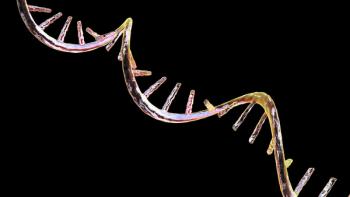
The EndonucleaseGTP ELISA Kit from Cygnus Technologies detects and quantitates residual endonuclease impurities in recombinant vaccines and viral vectors used for gene therapy.

The EndonucleaseGTP ELISA Kit from Cygnus Technologies detects and quantitates residual endonuclease impurities in recombinant vaccines and viral vectors used for gene therapy. With a detection limit of ~0.06 ng/mL, the kit is three times more sensitive than the only other commercially available assay for detection and quantitation of these endonuclease impurities, according to the company. The kit also contains all the necessary, ready-to-use reagents for 96 analyses in microplate format, including a set of calibrated endonuclease standards. The assay can be easily integrated into desired workflow points-from process development to quality control to lot release testing.



Related to this article

The BioPharm Brief: A Matrix-Targeting ADC in Head and Neck Cancer, an RNAi Approval in Myasthenia Gravis, and AbbVie Bets on AND-Gated Bispecifics
Pyxis Oncology’s EDB+FN-targeting ADC micvotabart pelidotin shows a 39% confirmed response rate in previously treated head and neck cancer, FDA approves Regeneron and Alnylam’s cemdisiran (Livsayis) as the first RNAi therapy for generalized myasthenia gravis, and AbbVie partners with DISCO Pharmaceuticals on AND-gated bispecifics for solid tumors.
The BioPharm Brief: A First for Streamlined Biosimilar Approval, a Head-to-Head Bispecific Trial in Wet AMD, and In Vivo KIR-CAR T
Biocon’s pertuzumab biosimilar Pebrilzo becomes the first biosimilar approved under EMA’s tailored clinical approach, Visara doses the first patient in a phase 2b trial comparing its VEGF-A/ANG-2 bispecific VIS-101 with aflibercept in wet AMD, and Verismo Therapeutics licenses Stanford’s PACK-IT technology for in vivo KIR-CAR T therapies.