

“We are building Mendra to deliver high-potential rare disease medicines more effectively to patients on a global scale.”
News|Articles|January 22, 2026
New $82 Million Biopharma Launch Targets Rare Disease Development With AI-Driven Strategy
Author(s)Feliza Mirasol
Listen
0:00 / 0:00
Key Takeaways
- Mendra's strategy focuses on asset acquisition, development efficiency, and AI application in rare disease drug development.
- The company secured $82 million in Series A financing to build a portfolio of rare disease assets.
Mendra’s launch highlights the growing use of AI to improve patient identification, clinical execution, and commercialization in rare disease programs.
Advertisement
A newly launched biopharmaceutical company, Mendra, is entering the rare disease sector with an approach that emphasizes asset acquisition, development efficiency, and the application of AI across clinical and commercial workflows. Mendra announced its launch on Jan. 21, 2026, alongside the closing of an $82 million
The financing was co-led by OrbiMed, 8VC, and 5AM Ventures, with participation from Lux Capital and Wing VC. The capital will be used to build an initial portfolio of rare disease assets and support development activities intended to shorten timelines from acquisition through commercialization.
The scale of this Series A funding reflects
How is AI being applied to rare disease drug development?
Rare disease drug development is
Mendra’s strategy centers on
Rather than focusing on discovery, the model emphasizes improving execution and coordination once a therapeutic opportunity has been identified (1). This reflects a broader industry shift toward
“We are building Mendra to deliver high-potential rare disease medicines more effectively to patients on a global scale,” said Joshua Grass, co-founder and CEO, Mendra, in a company press release (1). “By combining deep rare disease expertise with AI-driven capabilities across asset selection, clinical development, and global commercialization—some of the greatest challenges in rare disease drug development—we believe we can accelerate timelines, improve execution, and expand access for these underserved patients.”
Why does this model matter for the rare disease ecosystem?
The launch of Mendra highlights a growing specialization within the rare disease landscape, in which companies increasingly differentiate between discovery, development, and commercialization capabilities. Many rare disease programs originate in academic settings or
A company structured to acquire and advance assets may provide an alternative route for these programs, particularly where scientific risk has been reduced but operational hurdles remain. If successful, this approach could influence how rare disease assets are transitioned from early research into later-stage development and how responsibilities are distributed across the ecosystem (5).
What experience supports execution and commercialization?
Mendra’s leadership team brings experience spanning rare disease drug development, global commercialization, and technology development. Grass previously contributed to building BioMarin Pharmaceutical’s rare disease portfolio and held leadership roles at Modis Therapeutics and Escient Pharmaceuticals.
Commercial strategy is led by Jeff Ajer, former chief commercial officer at BioMarin, where he oversaw the launch of multiple rare disease therapies globally (1). Mendra’s technology strategy is led by Lalarukh Haris Shaikh, PhD, whose background includes executive leadership roles at Palantir Technologies, while business development is overseen by Gregory Balani, PharmD, who has experience across pharmaceutical business development and venture investment (1).
As rare disease development increasingly depends on data integration, patient identification, and global coordination, models that combine clinical, commercial, and technology expertise may gain traction. Mendra’s launch underscores how capital deployment, AI, and operational experience are converging as the biopharmaceutical industry seeks more scalable approaches to delivering therapies for small and geographically dispersed patient populations.
References
- Mendra.
Mendra Launches with $82 Million Series A to Acquire, Develop, and Commercialize Therapeutics for High Unmet Need Rare Diseases . Press Release. Jan 21, 2026. - Abouarab, B.; Bazarian, C.; Ben Chaouch, Z.; et al. Financing Repurposed Drugs for Rare Diseases: A Case Study of Unravel Biosciences. Orphanet J Rare Dis. 2023,18 (1), 287. DOI:
10.1186/s13023-023-02753-y - Sharma, D.; Anabala, M.; Jain, V. V.; et al. Computational Landscape in Drug Discovery: From AI/ML Models to Translational Application. Scientifica (Cairo) 2025, 2025, 1688637. DOI:
10.1155/sci5/1688637 - Citeline.
Rare Disease R&D: Continued Growth Amid Challenges . citeline.com. Feb. 24, 2025. - Griebel, L.; Berman, J. R.
Navigating Key Challenges in M&A Deals in the Rare Disease Sector . morganlewis.com/blogs. Feb. 20, 2025.
Advertisement
Related to this article

Zylidac will test whether optogenetic cell lines that hit 21 g/L in small-scale CHO runs can deliver higher-yield complex biologics at GMP scale.

Revakinagene taroretcel (Encelto), the only FDA-approved MacTel therapy, slowed photoreceptor loss by up to 54.8% vs sham in phase 3 trials.
At PharmSci 360, Insilica CEO Thomas Luechtefeld will present on auditable agentic AI systems and how they are expanding computational toxicology beyond single predictive models.

Dr Julie Gerberding and Dr David Berry will headline the October 25-28 New Orleans meeting, which adds a USP standards workshop and AI, organoid tracks.

Backed by €400 million (US$449 million) in EU-cleared German aid, the new Frankfurt facility is designed to secure insulin supply for people with diabetes from 2032.

EA2251, the 7th registrational trial of ivonescimab, will test it plus chemotherapy vs pembrolizumab or durvalumab regimens in first-line BTC.

Interim phase 1 data presented at UEG Week 2026 showed Bionyra Pharma’s Fc-engineered anti-TL1A antibody BYN-002 suppressed soluble TL1A with a half-life supporting potential every-3-to-6-month maintenance dosing in IBD.
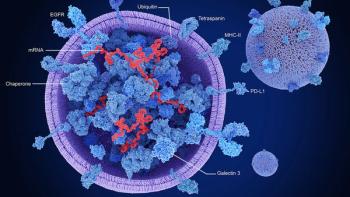
Inhaled EXO-CD24 kept 85% of patients with ARDS free of respiratory failure at day 7 vs 33.3% with placebo in a 90-patient phase 2b trial.
Advertisement
Advertisement
Trending on BioPharm International
1
Sanofi Begins Construction of EU-Backed Insulin Plant in Frankfurt
2
Zylidac Bio to Scale Prolific's Optogenetic Cell Line Platform to GMP
3
TaiMed’s Anti-CD4 Antibody TMB-365 Reduces HIV Viral Load in Phase 1, Supporting Long-Acting Combination Regimens
4
Akeso's Ivonescimab Enters Phase 2/3 Biliary Tract Cancer Trial in US
5