

With approximately 10 million people globally living with T1D and roughly 500,000 new diagnoses annually, producing 100,000 doses per year at perfect efficacy and durability would reduce the global T1D growth rate only modestly, from approximately 5% to approximately 4%.
News|Videos|August 11, 2026
Manufacturing Scale, Safety Profiles, and Reimbursement Reform Are Critical Hurdles for Type 1 Diabetes Cell Therapy
Author(s)Feliza Mirasol, Steve Harr
Dr Steve Harr, Sana Biotechnology's CEO, identifies scalability, commercialization, and reimbursement as the defining hurdles for curative islet cell therapy in type 1 diabetes.
Advertisement
In the final segment of BioPharm International®’s interview with
Dr Harr frames the company's development path around 4 sequential questions: Does it work? Can it be scaled? Can it be commercialized? And how will it be paid for? On efficacy, he says definitive data on whether the therapy can achieve insulin independence at a therapeutic dose, beyond the low-dose immune evasion already demonstrated, should be available within a year.
Why is manufacturing scale the most formidable challenge facing curative islet cell therapy for type 1 diabetes?
Dr Harr places the
On stem cell manufacturing safety profiles. specifically, Dr Harr identifies 2 priority risks, genomic mutations arising during cell culture and off-target cell differentiation, which may give rise to the unintended presence of non-islet cell types in the final product.
"If you have a stomach that's growing in your muscle for 20 years, it becomes more than a nuisance," Harr emphasizes, illustrating why off-target cell control is a non-negotiable safety requirement.
On reimbursement, Dr Harr stresses that a curative medicine must work financially for patients, payers, providers, and developers simultaneously. He notes that a therapy utilized by only some of these stakeholders will likely never achieve broad clinical adoption regardless of its efficacy.
For more insights from Dr Harr on islet cell therapy as a cure for T1D, watch these other interview clips:
About the speaker
Steve Harr, MD, President and CEO, Sana Biotechnology
Prior to co-founding Sana, Dr Harr served as chief financial officer and head of Corporate Development for Juno Therapeutics until its acquisition by Celgene in early 2018. He was a member of the board of directors of Loxo Oncology prior to its acquisition by Eli Lilly and Company in early 2019. Dr Harr also was a co-founder and member of the board of directors of JW Therapeutics, a cell therapy company in China. Prior to joining Juno, Dr Harr was at Morgan Stanley, as managing director and head of Biotechnology Investment Banking, and previously as a biotech research analyst and co-head of global healthcare research. He obtained his MD from Johns Hopkins University School of Medicine. He was an internal medicine resident at the University of California, San Francisco, and performed research at Harvard Medical School and Massachusetts General Hospital.
Reference
- Gregory GA, Robinson TIG, Linklater SE, et al. Global incidence, prevalence, and mortality of type 1 diabetes in 2021 with projection to 2040: a modelling study. Lancet Diabetes Endocrinol. 2022;10(10):741-760. doi:
10.1016/S2213-8587(22)00218-2
Advertisement
Related to this article

Caribou is halting vispa-cel and CB-011, allogeneic CAR-T therapies that showed up to 92% response rates, citing a difficult financing environment.
Bristol Myers Squibb's Nathan Pennell explains how the MRD endpoint supports accelerated approval in multiple myeloma without changing how clinicians monitor patients.

Artiva Biotherapeutics will present data on AlloNK, an allogeneic, non-genetically modified NK cell therapy given with rituximab, in refractory rheumatoid arthritis, Sjögren disease and systemic sclerosis at ACR Convergence 2026, ahead of a planned phase 3 trial in rheumatoid arthritis.

The 15-month project could let living cell therapies ship and store at room temperature, cutting cold-chain costs that limit patient access.
Antisense oligonucleotides are reshaping drug design, from RNase H gapmers to inhaled delivery; this FAQ explains how they work and why trials still fail.
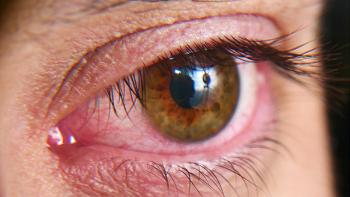
Teprotumumab N01 (Sycume) reduced eye bulging in 60.4% of patients with chronic, inactive thyroid eye disease in a phase 3 trial.
Manufacturing remediation, not efficacy or safety data, is delaying US approval of Novo's h+emophilia A therapy denecimig.
Doubled drug substance capacity at Alvotech's Reykjavik, Iceland, site aims to secure steady US supply of the Humira biosimilar Simlandi.
Advertisement
Advertisement