China-based HUTCHMED has entered into an exclusive worldwide license agreement with GSK for HMPL-A830, a first-in-class antibody-targeted therapy conjugate (ATTC) combining a KRAS inhibitor with an anti-epidermal growth factor receptor (anti-EGFR) antibody, the company announced September 3, 2026.¹ Under the agreement, HUTCHMED will receive a $110 million upfront payment and is eligible for up to $1.295 billion in total payments, including development, regulatory, and commercial milestones plus tiered royalties on net sales.¹
Key facts
- Drug: HMPL-A830 (HUTCHMED; licensed to GSK)
- Class: Antibody-Targeted Therapy Conjugate (KRAS inhibitor + anti-EGFR antibody)
- Indications: Colorectal, pancreatic, and lung cancer (initial focus)
- Deal terms: $110 million upfront; up to $1.295 billion total; tiered royalties
- Deal structure: HUTCHMED leads phase 1; GSK leads development after that
- Territory split: GSK gets ex-China rights; HUTCHMED retains China/HK/Macau/Taiwan
- Mechanism rationale: KRAS mutated in up to 89% of pancreatic cancers
- Trial: NCT07718581; phase 1 expected to start H2 2026
- Pipeline context: HUTCHMED's 3rd ATTC candidate; 1st licensed to a global partner
- Geography: Global license (ex-Greater China)
"We are proud to work with GSK, a globally leading biopharmaceutical company that, like HUTCHMED, is committed to developing innovative new cancer medicines to address significant unmet medical needs worldwide," said Johnny Cheng, acting chief executive officer and chief financial officer of HUTCHMED, in a company press release.¹ "HMPL-A830 is our third drug candidate from these novel payload platforms and the first from our platform to be licensed to a global partner, following two candidates that have entered clinical development."
How does HMPL-A830 work?
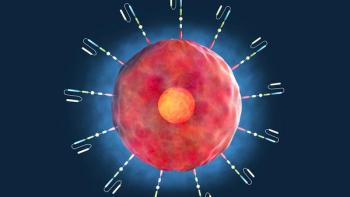
HMPL-A830 combines a selective KRAS small molecule inhibitor payload conjugated to an anti-EGFR antibody, designed to deliver the KRAS inhibitor directly to EGFR-expressing tumors while simultaneously blocking EGFR and KRAS signaling.¹ Unlike traditional cytotoxin-based antibody-drug conjugates, ATTCs are designed to combine targeted therapies to achieve synergistic anti-tumor activity. HUTCHMED said its ATTC platform has outperformed standalone antibody or small-molecule inhibitor components in efficacy and safety in preclinical models.¹
KRAS is mutated in approximately 44% of colorectal cancer, 34% of lung adenocarcinoma, and up to 89% of pancreatic ductal adenocarcinoma cases, and EGFR signaling is a known driver of resistance to KRAS-targeted therapies. These factors provide the rationale for dual targeting of both proteins.² Clinical development will initially focus on colorectal, pancreatic, and lung cancer.¹
What are the terms of the agreement?
According to the terms, HUTCHMED will conduct the global phase 1 development program, expected to begin in the second half of 2026 (NCT07718581), after which GSK will assume responsibility for all subsequent clinical development and commercialization outside mainland China, Hong Kong, Macau, and Taiwan, where HUTCHMED retains full rights.¹ GSK also holds a right of first negotiation on one earlier-stage ATTC candidate from HUTCHMED's pipeline.¹ BofA Securities acted as exclusive financial advisor to HUTCHMED on the transaction.¹