

“Manufacturing capability increasingly determines which digital designs can become usable starting materials and which biological ideas can progress through development.”
Commentary|Articles|November 17, 2026
Examining the Future of DNA-Enabled Therapies
Author(s)Joe Hedley
Listen
0:00 / 0:00
Advances in DNA manufacturing could help overcome emerging constraints and support the next generation of cell and gene therapies.
Advertisement
Cell and gene therapy (CGT) development is becoming more sophisticated, and DNA is taking on an increasingly important role across therapeutic manufacturing workflows. It serves as a template for mRNA production, supports plasmid DNA manufacturing, and provides genetic material for viral vector production.
Synthetic DNA can also enable personalized approaches by tailoring sequences to specific biological requirements. These applications place DNA manufacturing upstream of some of the most rapidly evolving areas of genetic medicine.
As CGTs evolve, DNA production can become a constraint on what developers are able to investigate and manufacture. The industry needs to consider DNA manufacturing capability alongside advances in therapeutic design, rather than treating the supply of DNA starting material as a largely standardized procurement exercise.
Manufacturing must keep pace with changing sequence requirements while also providing a reliable, scalable supply. Future manufacturing models must combine greater capacity for biological complexity with the deployability required to make DNA more accessible as programs progress.
DNA sequence complexity is reshaping manufacturability
Developers have often used sequence length as a proxy for how easily DNA can be produced, but length does not provide a complete picture of manufacturability, particularly with traditional synthesis models. As mRNA, viral-vector, and other advanced therapeutic markets expand, DNA designs increasingly incorporate functional features such as inverted terminal repeats (ITRs), long poly(A) regions, and highly repetitive elements.
These features can make a sequence difficult to manufacture even when its overall length is compatible with the manufacturing method being used. Some of the sequence features that are hardest to manufacture are also often essential to biological function.
Long poly(A) regions may be required in mRNA and self-amplifying RNA applications, but cell-based propagation can truncate them. Repetitive sequences such as CAG repeats may be difficult to redesign without altering the biological feature being studied.
The scope for redesigning a sequence and ensuring manufacturability depends on how much of the sequence or structure developers can change without affecting function:
- Protein-coding regions: Developers can sometimes recode these regions synonymously so that a different DNA sequence yields the same protein.
- Noncoding functional elements: ITRs, poly(A) tails, promoters, and untranslated regions offer far less flexibility, because their sequence or structure may itself be functionally important.
- Repetitive or structurally complex regions: Features such as repeats may be difficult to alter when the sequence itself forms part of the biological feature being investigated.
Manufacturing limitations constrain the sequences that can be produced, reducing the ability to explore therapeutic designs whose function depends on difficult-to-manufacture features. For biological requirements rather than manufacturing constraints to drive therapeutic design, manufacturing methods must accommodate greater complexity while maintaining sequence fidelity and downstream usability.
Where traditional DNA manufacturing constraints emerge
Traditionally, DNA manufacturing has relied on chemical synthesis followed by assembly and, for larger constructs, cloning and propagation in cells such as Escherichia coli. Manufacturing challenges associated with this method can emerge throughout development, from the first attempt to produce a sequence to scale-up and process transfer.
The most common pressure points include:
- Sequence manufacturability and synthesis: Limitations may only become apparent when a biotechnology company or research team tries to source a complex sequence and finds that it cannot be produced using established methods. In other cases, synthesis may be possible at small scale before difficulties emerge later in development. The ability to produce a sequence once does not necessarily demonstrate that it can be manufactured reproducibly in the quantity and quality required by a therapeutic program.
- Cloning and propagation: Challenges can arise when sequences contain features that are difficult to maintain in cell-based systems. The transition from chemically synthesized material into cell-based systems is an important point at which sequence-dependent limitations become apparent.
- Scale-up: Early research may prioritize access to small amounts of material and the freedom to iterate designs quickly, whereas later development introduces greater requirements for scale, reproducibility, and supply continuity. A manufacturing model that works adequately for an early experiment may become restrictive when the same sequence has to support a larger-scale production process.
- Process redevelopment and lead times: Practical considerations also influence the distinction between a sequence that is difficult to manufacture and one that is effectively impossible. Developers may produce a sequence successfully at small scale but require substantial process redevelopment or repeated attempts to achieve the quantity and reproducibility needed later in development. This can extend lead times to a point at which an otherwise technically feasible route becomes impractical for the program.
- Supply continuity: As programs progress, developers need reliable access to DNA at the required scale and quality. Manufacturing models that depend on lengthy supply chains or significant redevelopment as requirements change can make supply less responsive, particularly for programs involving multiple or evolving sequences.
Adding to these challenges, there is also a risk that DNA manufacturing limitations remain hidden. Many suppliers use sequence complexity screening tools to assess manufacturability before accepting an order, meaning suppliers may filter out difficult sequences before production.
This can obscure the extent of manufacturing constraints and create a misleading impression of what existing technologies can achieve. If sequences are routinely rejected or redesigned to suit established production methods, developers may perceive the resulting compromises as inherent limitations of the biology rather than the manufacturing process.
As more complex therapeutic approaches enter development, separating those two issues is expected to become increasingly important.
Quality requirements depend on how DNA will be used
As DNA manufacturing demands adapt to market needs and the complexity of sequences, quality requirements still need to reflect the downstream application. The most important considerations include:
- Sequence fidelity: This is an important quality attribute for complex structures such as poly(A) regions and ITRs, in which errors or alterations can affect the function of the material and its suitability for downstream use.
- Application-dependent quality requirements: The appropriate quality profile depends on the intended application. Homogeneity may carry different significance in antibody-related workflows than in vitro transcription or adeno-associated virus applications, in which purity can be particularly important to downstream performance.
- Fitness for intended use: The industry lacks a unified definition of what constitutes “good enough” DNA quality. Fitness for intended use may provide a more meaningful framework, provided manufacturers and developers understand which characteristics have a direct bearing on the downstream process.
- Analytical characterization: Orthogonal characterization using methods such as sequencing, mass spectrometry, and chromatographic analysis can provide a more complete understanding of starting material than reliance on a single measurement. The objective should be to characterize DNA in a way that reflects its role in the subsequent process and to identify variability before it propagates into later manufacturing steps.
Cell-free enzymatic production can ease traditional manufacturing constraints
Cell-based DNA manufacturing brings requirements around propagation, cell banking, and technology transfer during scale-up. These workflows can become more difficult when constructs contain features that cells truncate or struggle to propagate, limiting how reliably the intended material can be produced as programs progress.
Cell-free enzymatic production offers one route to overcoming some of these limitations, but realizing its potential requires a shift in perspective. Developers may treat requirements such as cell banking or sequence-dependent propagation constraints as inherent to DNA manufacturing when they in fact reflect the needs of a traditional production model.
Removing the cellular host changes these underlying assumptions and creates a different set of options for complex sequence production and scale-up. As a result, cell-free enzymatic DNA production may offer advantages across several areas:
- Greater flexibility for complex sequences: Removing cellular propagation can bypass some of the constraints associated with sequences that cells truncate or struggle to maintain.
- A different approach to scale-up: A physical, noncellular process may reduce reliance on cell banking and other steps specific to cell-based manufacturing.
- More consistent manufacturing transfer: A process that performs consistently across development stages and sites could support more adaptable technology transfer.
These characteristics are becoming increasingly relevant as therapeutic pipelines encompass a broader range of construct designs and manufacturing requirements. However, evidence of dependable quality and meaningful scale must still accompany greater design freedom.
Wider adoption depends on demonstrating that difficult sequences can be manufactured reproducibly and perform as required in downstream applications.
Deployable DNA production can support evolving therapeutic pipelines
Centralized manufacturing based on relatively fixed processes can leave programs vulnerable to disruption when manufacturers attempt to meet global demand. It can concentrate access to crucial DNA starting materials within a limited number of locations, increasing exposure to cross-border disruption and reducing regional control over manufacturing capacity.
The long-term opportunity in DNA manufacturing is a model that connects sequence design directly with production. An integrated manufacturing model could connect digital sequence design more directly with commercial-scale production, making it easier to accommodate changes as therapeutic programs evolve.
Rather than relying solely on physical materials moving through international supply chains, developers could transmit sequence information digitally and manufacture DNA closer to the point of need. This approach could become increasingly relevant as genetic medicines become more personalized or require a greater number of design iterations.
Deployable production with manufacturing systems capable of operating closer to the point at which DNA is required could reduce dependence on lengthy supply chains and make capacity more adaptable. Regional or on-site manufacturing could strengthen supply resilience and support greater sovereignty over crucial starting materials by reducing reliance on distant, centralized facilities.
This approach could also improve access to DNA manufacturing capacity and help developers respond more quickly when new sequences are required.
Manufacturing capability can expand the therapeutic design space
As computational and AI-driven approaches generate new biological designs, manufacturing constraints risk shaping which sequences are considered viable before they are ever tested. Addressing these constraints is important so developers can design future therapies around biological requirements rather than historical manufacturing limits.
If developers train design systems largely on material that existing methods can produce, manufacturability can become an implicit filter on the sequence space under exploration. Over time, researchers may redesign sequences to fit production constraints, and published biology increasingly reflects a more manufacturable subset of possible designs.
Computational models trained on that literature may then reproduce the same bias. Expanding DNA manufacturing capability could broaden the experimental space available to therapeutic developers, allowing researchers to evaluate sequences according to biological performance rather than whether they fit established production methods.
Cell-free enzymatic manufacturing could also generate new information about manufacturability. Capturing where sequences encounter difficulty and under which conditions could improve future prediction and routing, reducing reliance on historical assumptions about which designs are straightforward to produce.
Evolving DNA manufacturing alongside CGT innovation
For the next generation of CGTs, advances in delivery, therapeutic design, and biological understanding remain central to progress. Their impact also depends on the infrastructure used to convert those designs into physical material.
Manufacturing that can accommodate greater DNA complexity while maintaining appropriate quality and scalable, deployable production could help remove an increasingly important constraint from genetic medicine development. As the therapeutic design space expands, DNA production must evolve alongside it.
Manufacturing capability increasingly determines which digital designs can become usable starting materials and which biological ideas can progress through development.
About the Author
Joe Hedley, CEO and founder at NunaBio.
Advertisement
Related to this article

ProBio grants AbTis exclusive global rights to a discovery-stage oncology antibody for development as a site-specific antibody-drug conjugate.

Beam’s base-edited cell therapy met its primary endpoint in the BEACON trial, and a U.S. biologics license application is planned as early as year-end.

AstraZeneca acquired preclinical biotech Omniose, adding a bioconjugation platform for conjugate vaccines against serious bacterial infections.

Merck's GLP-1/glucagon co-agonist raised MASH resolution versus placebo at 52 weeks, but fibrosis and dose-response questions remain.

argenx's acquisition of Unnatural Products adds macrocyclic peptides that could yield oral or long-acting treatments for immune-mediated diseases.

In the second part of a two-part interview, Paz Vellanki of Precision for Medicine explains which confirmatory evidence can support a single-trial approval and why she expects FDA's rare disease framework to last.

FDA issues a complete response letter for Summit Therapeutics’ PD-1/VEGF bispecific ivonescimab in EGFR-mutated non-small cell lung cancer, approves Roche’s obinutuzumab (Gazyva) for primary membranous nephropathy, and approves AstraZeneca’s nanobody C5 inhibitor gefurulimab (Klygefa) for generalized myasthenia gravis.
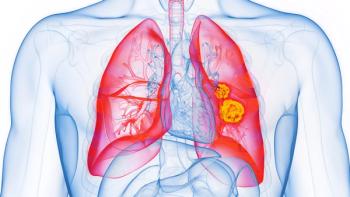
FDA declined to approve Summit Therapeutics and Akeso’s ivonescimab plus chemotherapy in previously treated EGFR-mutated NSCLC. The agency said the Phase 3 HARMONi trial’s progression-free survival benefit was not enough without a significant overall survival gain.
Advertisement
Advertisement
Trending on BioPharm International
1
FDA Approves AstraZeneca's Gefurulimab (Klygefa) for Generalized MG
2
Deals Roundup: J&J Buys Ollin, Lilly Adds Calytrix, and Novartis and Sanofi Strike Platform Pacts
3
FDA Rejects Summit’s PD-1×VEGF Bispecific Ivonescimab in EGFR-Mutated NSCLC, Citing Lack of Survival Benefit
4
FDA Approves Roche's Obinutuzumab (Gazyva) for Membranous Nephropathy
5