

“In many ways, the hardest part of drug development isn’t discovery but delivery. Once a molecule enters human testing, the last mile of R&D begins, and that’s where complexity explodes.”
Commentary|Articles|February 11, 2026
The Clinical Execution Gap: Why Great Science Often Fails at the Trial Stage
Author(s)Claudio Hegenberger, MD, MBA, MSc , Nick Trythall
Listen
0:00 / 0:00
Operational missteps, not flawed science, remain a leading cause of drug development delays, as fragmented systems, uneven technology adoption, and transactional sponsor–CRO relationships widen the “clinical execution gap.”
Advertisement
Every year, promising drug candidates stall not because the science is wrong, but because the execution is. The “clinical execution gap” is the space between what’s intended in research and what actually happens in trials.
And it remains one of the most expensive and challenging problems in modern drug development. Discovery tends to get the spotlight.
Investors and industry executives often prefer to focus on a novel molecule, mechanism or breakthrough slide at a conference. But the hard truth is that most therapies don’t fail in discovery.
They fail in the “boring” part no one wants to talk about: patient recruitment, data collection, site coordination, and the daily grind of clinical operations. The science may shine but the subsequent execution often stumbles.
Operational friction is the real barrier to breakthroughs
Clinical trials are often portrayed as a single unified process. In reality, they’re a complex web of moving parts: dozens of sites across continents, each with its own staff, systems, and standards. Recruiting the right patients is only the start.
Selecting sites based solely on scientific prestige, for instance, can be counterproductive. A principal investigator with a long publication record may not have the patient volume, infrastructure, or staff stability to deliver results.
Or they may participate in multiple competing studies, making it difficult to focus on any one trial. Meanwhile, smaller, less famous centers often outperform because they have established referral networks and experienced coordinators who know how to move patients through a protocol efficiently.
Retention adds another layer of complexity. Patients don’t drop out because they lose interest in science, but because participation is hard.
The travel, time, and costs, especially in low- and middle-income countries, can be prohibitive. Even when sites pay stipends, those may not cover the real burden.
Retention, at its core, depends on relationships: consistent staff, good communication, and patient education. When coordinators leave or sites turn over staff mid-trial, trust evaporates, and data quality goes with it.
Behind these problems lies a common theme: operational friction. Every handoff, every system, every form introduces a new potential failure point.
The more global the trial, the more those small frictions multiply.
The “last mile” problem of R&D
In many ways, the hardest part of drug development isn’t discovery but delivery. Once a molecule enters human testing, the last mile of R&D begins, and that’s where complexity explodes.
Each country has its own regulatory environment, infrastructure, and data-privacy rules. Electronic systems that work seamlessly in Europe may fail in Latin America, where many hospitals still use paper case-report forms.
Some health authorities accept digital submissions, whereas others require paper documents delivered in person. Connectivity, languages, and even definitions of “source data” vary.
Sponsors understandably crave uniformity via a single global process, consistent systems, and identical data standards. But reality doesn’t cooperate.
Achieving generalizable results often means balancing uniform trial design with the messy realities of regional execution. The idea that one protocol or one technology platform can govern a truly global study is more fantasy than fact.
This is the “last mile” problem in R&D: translating scientific precision into operational consistency across dozens of different environments. The tools exist, electronic data capture, remote monitoring, decentralized trial models, but deployment depends on infrastructure and context.
What works in Boston may not work in Brussels.
Technology is essential but uneven
Technology promises to simplify all this, but it can just as easily complicate it. While the shift from paper to electronic data capture was transformative, everything since has been incremental.
AI and machine learning can now forecast enrollment rates, identify high-performing sites, and automate data cleaning. Yet technology doesn’t remove the human factors that define trial success.
Systems still need to talk to each other, data still needs context, and someone still has to interpret what the algorithms find. The uneven adoption of technology across regions (the clinical trial digital divide) also creates new disparities.
We are now seeing the emergence of artificial intelligence (AI) in clinical research. It is powerful at pattern recognition and process automation, and proponents believe it will revolutionize all aspects of clinical trials.
But when it comes to judgment (i.e., protocol design, patient engagement, ethical trade-offs, etc.) it’s not a replacement for human experience. Sponsors have become skeptical of the early claims of AI, and that healthy skepticism is valid.
We believe that AI has a proper place in accelerating clinical trials. But the future of trials is not AI-run but rather AI-enabled, led by people who understand how to optimize collaboration between AI agents and humans.
Sponsor and CRO partnership (and accountability)
Perhaps the most stubborn challenge is cultural rather than technical. The sponsor–CRO–site relationship, meant to be a partnership, too often becomes transactional.
Sponsors want flawless execution and cost efficiency; CROs want predictable revenue and renewal; sites just want support and stability.
But true executional excellence depends on trust and continuity. When every new study is bid out to the lowest cost provider, no one invests in the long-term relationships or shared learning that make trials smoother over time.
Some sponsors have in recent years embraced a new model. Rather than bidding to any one of over a dozen potential CRO partners, and hoping to drive cost to the lowest vendor, they deliberately focus on just a handful of trusted CRO partners. They have come to understand that investment in trusted partnerships, like interest, compounds into far more value over time.
Indeed, the best partnerships start as early as protocol design. CROs see hundreds of studies across sponsors and therapeutic areas. They know what slows enrollment and what accelerates it, especially if they are focused on a few specific therapeutic areas. Yet their insights often go unused because sponsors often do not value collaboration.
Partnership also means shared accountability. A sponsor can’t simply outsource responsibility for trial conduct, and a CRO can’t deliver quality without empowerment.
Both sides must own outcomes, not just tasks.
Closing the gap
The clinical execution gap isn’t inevitable. It’s the result of fragmented systems, misaligned incentives, and an underappreciation for the operational craft of running trials.
Bridging it requires a mindset shift: seeing execution as integral to innovation, not a separate step that follows it.
Choosing the right CRO also should not be just a procurement decision. A strategic partner with deep experience in a specific therapeutic area doesn’t just understand the protocol.
They understand the patients, the investigators, and the nuances that make or break recruitment. Specialized CROs know where the real bottlenecks are and how to anticipate them, whether it’s screening criteria that are too narrow, follow-up windows that strain site capacity, or data entry processes that slow monitoring.
Scale matters too. A CRO with true global reach can de-risk a study long before the first patient is dosed. They know which regions can activate quickly, which regulators are pragmatic, and which sites have reliable coordinators and stable staff.
They can flex resources across geographies, adapt to local realities, and still maintain global consistency. This becomes an invaluable advantage when timelines are tight and the sponsor’s pipeline is on the line.
The best partnerships start early. When CROs are brought in at the protocol-design stage, their operational insight can prevent downstream chaos, turning potential obstacles into manageable risks.
This is how you close the gap between vision and execution: not by adding more systems or headcount, but by choosing partners who know the terrain and have proven they can navigate it.
About the Authors
Claudio Hegenberger, MD,MBA, MSc is VP of Clinical Affairs at Emerald Clinical Trial. Dr. Hegenberger brings 27 years of global experience in all pharma Medical Affairs areas (Clinical Development and Operations, CROs' supervision, PV, MI, Safety, and country/regional MDs supervision), most recently serving as VP of Medical Affairs at Pfizer.
With an MD in Internal Medicine, he holds multiple advanced degrees and certifications—including from Georgetown University, Mount Sinai Hospital, and Harvard — and became an Associate Professor of Internal Medicine in 2 universities in Argentina.
Dr. Hegenberger leads Emerald’s Scientific and Clinical Affairs team and also supports strategic business development initiatives. Currently based in Madrid, he is fluent in English, Spanish, and German, and has extensive experience across all therapeutic areas Internal Medicine (CV, Metabolic, CNS & Pain, Nephrology, OTC line), Inflammation and Immunology, Vaccines, Oncology, Rare Diseases, and Hospital line.
Nick Trythall is the Chief Operations Officer at Emerald Clinical Trials. With 27 years of industry experience spanning Europe, North America, and the Asia-Pacific region, he specializes in strategic operations delivery, workforce management, client relationships, and process optimization. His global background enables him to develop strategies that drive operational excellence and effective team collaboration worldwide.
Beginning his career in UK banking, Nick transitioned to clinical research and has held leadership roles at Pfizer, INC Research (now Syneos Health), ICON, and Premier Research. His experience across pharmaceutical companies and CROs has honed his expertise in business transformation and strategic workforce management. Nick is recognized for his thought leadership in relationship management and team dynamics, with a leadership philosophy emphasizing character, credibility, and employee engagement.
Advertisement
Related to this article
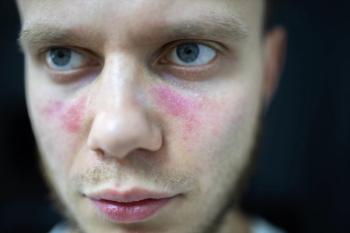
IMVT-1402 (imeroprubart) failed to reach statistical significance on CLASI-A at Week 12 in a 57-patient proof-of-concept study, and Immunovant will stop development in cutaneous lupus erythematosus. The anti-FcRn antibody continues in five other autoimmune indications.

SOTIO Biotech's LRRC15-targeted antibody-drug conjugate SOT106 now holds both Orphan Drug and Fast Track Designations in soft tissue sarcoma and osteosarcoma. The company expects to start first-in-human testing later in 2026.
Survodutide advances metabolic disease treatment, while biosimilar capacity expands, FDA delays hemophilia review, and lupus data support next steps.

Litifilimab extended skin responses through 52 weeks in phase 2 AMETHYST data in cutaneous lupus erythematosus, with phase 3 results expected in 2027.

Manufacturing remediation, not efficacy or safety data, is delaying US approval of Novo's h+emophilia A therapy denecimig.

Doubled drug substance capacity at Alvotech's Reykjavik, Iceland, site aims to secure steady US supply of the Humira biosimilar Simlandi.

The glucagon/GLP-1 dual agonist hit both weight loss endpoints in phase 3, though gastrointestinal discontinuations and competitor data temper the readout.
CaseBioscience joins an ARPA-H effort to develop room-temperature cell therapy preservation, Novartis licenses an mRNA-encoded T-cell engager from Abogen, and AstraZeneca, Daiichi Sankyo, and Summit plan to combine Datroway with ivonescimab.
Advertisement
Advertisement