




Manufacturing
Latest News
Advertisement
Review of SUT Adoption in Biopharma Manufacturing
The evolution of therapeutic modalities drives the adoption of single-use technologies.

Moving Biosimilars Forward in a Hesitant Market
Despite a growing number of biosimilar approvals, market uptake remains a challenge.
Automating the Future of Fill/Finish
Given the criticality of fill/finish processes, it is clear that automation is the next technological step.

Latest Videos






Advertisement
More News

With 15 patients now dosed in its pivotal EMERALD trial, Resolution will build on the 70% 4-year transplant-free survival seen with RTX001 in earlier data.

CordenPharma is expanding its Caponago, Italy site with a €80 million multi-year investment and new aseptic fill-finish lines, aiming to reach 500 million sterile injectable units of annual capacity to meet rising demand across peptide, biologic, LNP, and oligonucleotide-based drug products.

BIIE CEO Dr Stephen Wilson explains why Basel's condensed innovation ecosystem was chosen for the institute’s translational research mission.

Single-partner platforms promise to replace fragmented prescription hubs with one connected, data-driven journey for manufacturers and patients alike.
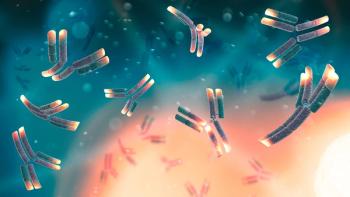
Solstice Oncology launched with a $225 million Series A financing to advance porustobart, a second-generation, Fc-enhanced CTLA-4 antibody licensed from Harbour BioMed, into neoadjuvant Phase 2 testing for microsatellite-stable colon cancer.
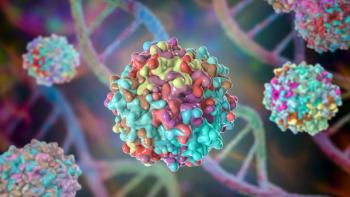
Encoded Therapeutics closed a $275 million Series F financing to fund pivotal and expansion studies of ETX101, an AAV9-mediated gene regulation therapy for SCN1A-positive Dravet syndrome, alongside commercial-scale buildout of the company's in-house GMP manufacturing.
Amgen and AstraZeneca announced that the Phase 3 DeLLphi-305 trial met its primary endpoint, with Imdelltra (tarlatamab) plus Imfinzi (durvalumab) significantly improving overall survival versus durvalumab alone as first-line maintenance therapy for extensive-stage small cell lung cancer — the first phase 3 study of a bispecific T-cell engager to show a survival benefit in this earlier-line setting.
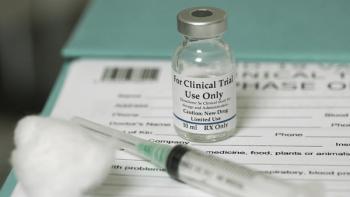
Del-desiran missed its primary endpoint in a phase 3 DM1 trial, though secondary measures showed signs of clinical activity.

Aptar Pharma's Nanopharm business will lead inhaled formulation development and device assessment for ACT-101, Aceso Therapeutics' antisense oligonucleotide candidate designed to correct CFTR protein function in cystic fibrosis patients carrying the F508del mutation.

BrainChild Bio's BCB-276 extended survival to 19.8 months from diagnosis in phase 1, backing its $116 million-funded pivotal DIPG trial.
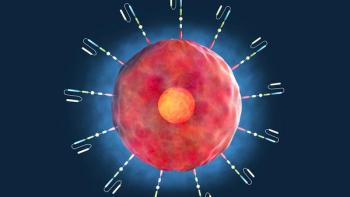
Bristol Myers Squibb's GPRC5D-Directed CAR T Cell Therapy Meets Primary Endpoint in Multiple Myeloma
Bristol Myers Squibb reported positive topline phase 2 results for arlocabtagene autoleucel, a potential first-in-class GPRC5D-directed CAR T cell therapy, in patients with quadruple-class exposed relapsed and refractory multiple myeloma who had already received a prior BCMA-targeted therapy.

9MW1911 cut severe COPD exacerbations by up to 100% at the highest dose, supporting Mabwell's push toward phase 3 development.
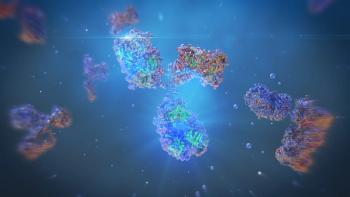
Cipla's US subsidiary secured exclusive rights to commercialize QL2107, Qilu Pharmaceutical's phase 3 biosimilar candidate to Keytruda, ahead of the reference biologic's anticipated 2028 patent expiration.

Medicus Pharma secured worldwide rights to PF-08046031 (CD228V), an antibody-drug conjugate targeting melanotransferrin that Pfizer discontinued earlier this year following its $43 billion Seagen acquisition, in a co-development and license agreement that could pay Pfizer more than $1 billion in milestones.

GMP cleanroom differential pressure control prevents FDA 483 citations and contamination failures through HVAC design and validation.

TScan Therapeutics is reorganizing to prioritize in vivo-engineered TCR-T therapy for solid tumors, pausing its phase 3 trial and autoimmune program and cutting about 75% of its workforce, even as new phase 1 data showed complete donor chimerism in all tracked heme malignancy patients.
Apazunersen missed its primary endpoint in a phase 3 Angelman syndrome trial, meaning that patient population remains without an approved treatment option.
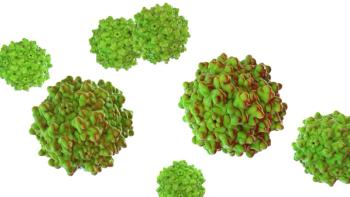
uniQure submitted a Biologics License Application to the FDA and a Marketing Authorisation Application to the UK's MHRA for ifezuntirgene inilparvovec (AMT-130), an AAV5 gene therapy for Huntington's disease, based on three-year Phase I/II data — a potential first disease-modifying treatment for a condition with no approved therapies that slow progression.
Ultragenyx published 96-week phase 3 data for GENGLYCOS, its AAV8 gene therapy for glycogen storage disease type Ia, in The Journal of Inherited Metabolic Disease, showing sustained cornstarch-intake reductions and continued glycemic control roughly six weeks after the therapy's FDA accelerated approval.

Sponsored
Andrew Mitchell, Agilent Advanced Therapeutics, explains what it actually takes to produce biotherapeutics, from cell bank to commercial launch.
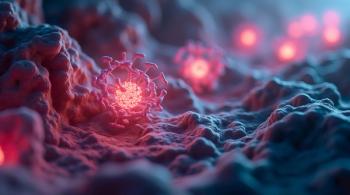
ArsenalBio is halting all development of its ex vivo CAR T programs for solid tumors and laying off the majority of its workforce as it pivots the company entirely toward in vivo CAR T therapy, joining a fast-growing field that already includes Johnson & Johnson, Eli Lilly, and several other developers.

NewBiologix's Xcell platform aims to replace costly transfection with stable cell lines for Synastra's high-dose DMD gene therapy.

Teva's TEV '408 blocked gluten-induced gut damage in a phase 2a trial, supporting its use for celiac disease, which has no approved drug treatment.

GSK will begin a phase 3 trial in September 2026 for its investigational mRNA seasonal flu vaccine after phase II data showed stronger immune responses than licensed comparators. The candidate is designed to target both hemagglutinin and neuraminidase, a dual-antigen approach not yet tested in a late-stage mRNA flu trial.

LIlly reports that Taltz plus Zepbound helped 30.6% of psoriasis patients clear skin and lose 10%+ weight at 1 year, versus 4.4% on Taltz alone.
Advertisement
Advertisement
Trending on BioPharm International
1
Merck and Kelun’s Sac-TMT Extends Survival by Nearly 7 Months in Pretreated Endometrial Cancer
2
BMS Reports Death in Phase 1 Zolacabtagene Autoleucel MS Study
3
The BioPharm Brief: Survival Gains, a Modest ADC Win, and CAR-T in Multiple Sclerosis
4
BioNTech’s HER2 ADC Hits Phase 3 Goal, but Companies See Limited Benefit
5