




Biopharmaceutical Analysis
Latest News
Advertisement
Why Automation with the Correct Liquid Handler is Integral to Improved NGS Outcomes
NGS abbreviates drug discovery timelines.

Biologics Quality Control: The Growing Need for Accessible Proteomics
There is a great need for sensitive, precise, and easily accessible analytical detection techniques for protein sequencing.
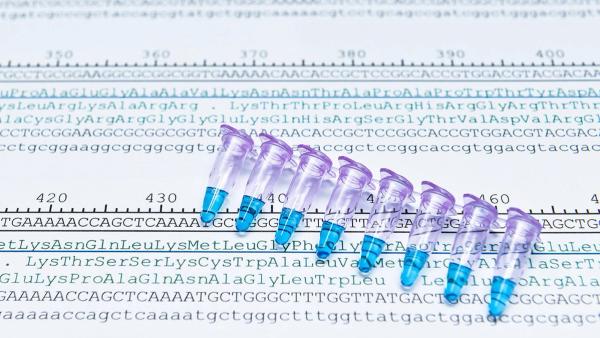
Navigating Challenges in Cell Therapy Potency Assays
Developing cell-based potency assays for cell therapies requires meticulous coordination.

Latest Videos



Advertisement
More News

Small molecules to complex biologics: Mastering bioanalytical workflows using high resolution mass spectrometry (HRMS)
BySCIEX
Webcasts
Webinar Date/Time: June 18th, 2026, 11:00am ET
Webcasts
Webinar Date/Time: Tue, Jun 16, 2026 11:00 AM EDT

For ATMP developers, the greatest barrier to commercialization is often not scientific discovery or funding, but the challenge of translating research-stage processes into reproducible, GMP-compliant manufacturing without compromising the therapy itself.
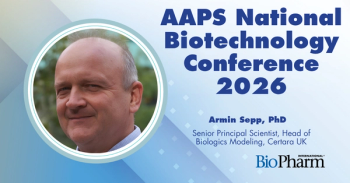
Certara UK’s Dr. Armin Sepp, who spoke at the 2026 AAPS National Biotechnology Conference, explains how quantitative systems pharmacology may improve CAR T-cell safety and efficacy by modeling immune activation, tumor response, and cell persistence.
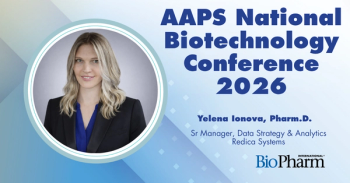
Yelena Ionova, Pharm.D., Redica Systems, discusses how benchmarking inspection data, strengthening sterile manufacturing controls, and adopting continuous regulatory intelligence strategies can help cell and gene therapy manufacturers improve inspection readiness and quality system performance.
Yelena Ionova, Pharm.D., Redica Systems, described how FDA and EMA standards for cell and gene therapy chemistry, manufacturing, and controls are increasingly aligned, yet manufacturers continue to struggle with basic GMP elements such as quality oversight, sterile processing, and staff training. She emphasized that newer CGT facilities have a critical opportunity to design quality systems and data integrity controls correctly from the outset to avoid costly remediation later.
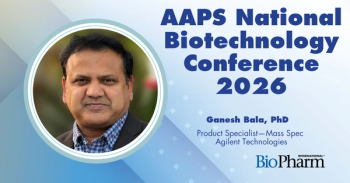
Multi-attribute LC–MS methods improve characterization of complex bioconjugates, supporting scalable and regulatory-ready biotherapeutic development, says Agilent Technologies’ Dr. Ganesh Bala, who spoke at the 2026 AAPS National Biotechnology Conference.

The opening plenary session at this year’s AAPS National Biotechnology Conference will spotlight AI and NAMs as tools that advance predictive toxicology and human-relevant models to improve drug safety and translational research.

Webcasts
Webinar Date/Time: Thu, May 21, 2026 11:00 AM EDT
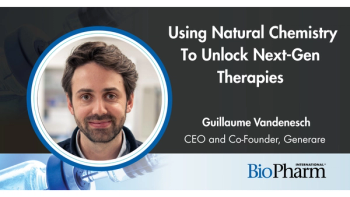
Expanding natural chemical space may improve AI drug discovery by providing biologically relevant data to generate more clinically impactful therapeutics, says Guillaume Vandenesch, CEO and co-founder of Generare, in this exclusive interview.

As 2026 marches forward, the biopharma industry finds itself balancing therapeutic innovation with operational discipline across manufacturing, data integrity, and next-gen precision medicine

Webcasts
Webinar Date/Time: Thu, Apr 30, 2026 11:00 AM EDT

CGT is rapidly transforming oncology and rare disease research, with patient-derived models, advanced imaging, CRISPR/Cas9, and 3D organoids driving innovation while solid tumor modeling remains a critical frontier.

While allowing for high throughput and efficiency, the bulk fill/finish process exerts extreme stress on glass containers, resulting in cosmetic defects and breakage.

With Sanofi as one of its backers, Earendil Labs is set to advance its AI-native biologics platform to scale antibody discovery, accelerate IND filings, and expand partnerships in autoimmune and oncology research.

The company is targeting the $3 billion pancreatic cancer market with its lead proenzyme therapy candidate, PRP, which is supported by strong preclinical tumor inhibition data and for which a PK assay will be developed and validated.

Sartorius Launches Rational-Design CHO Host Cell Line Delivering Up to Three-Fold Productivity Gains
A newly engineered CHO host from Sartorius, developed through proteomic profiling and targeted genome editing, demonstrates up to three-fold productivity increases and accelerated nine-week cell line development timelines, supporting more stable, high-titer biomanufacturing for biologics and biosimilars.

Under the collaboration, Merck and Mayo Clinic will integrate multimodal clinical and genomic datasets with AI models to enhance target biology insights and translational decision-making.

Spectral flow cytometry is democratizing high-parameter cell analysis, using modular instruments and AI to unlock deeper insights in cancer research.

Phase III data show that Gazyva/Gazyvaro (obinutuzumab) significantly improved complete remission rates at two years compared with tacrolimus in adults with primary membranous nephropathy, with additional benefits seen across key secondary endpoints and no new safety signals identified.
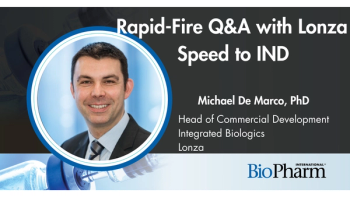
Lonza’s Michael De Marco emphasizes that early tox milestones strengthen investor confidence, support funding decisions, and reduce development risk for emerging biotechs.
Webcasts
Webinar Date/Time: This event is now available on demand
Webcasts
Webinar Date/Time: Thu, Feb 26, 2026 4pm GMT / 5 pm CET / 8am PT
Webcasts
Webinar Date/Time: Thu, Feb 26, 2026 12:00 PM EST

Next-gen antibody R&D is shifting to multifunctional modalities driven by manufacturing scale and regulatory acceleration.
Advertisement
Advertisement
Trending on BioPharm International
1
Sanofi Begins Construction of EU-Backed Insulin Plant in Frankfurt
2
TaiMed’s Anti-CD4 Antibody TMB-365 Reduces HIV Viral Load in Phase 1, Supporting Long-Acting Combination Regimens
3
Akeso's Ivonescimab Enters Phase 2/3 Biliary Tract Cancer Trial in US
4
Zylidac Bio to Scale Prolific's Optogenetic Cell Line Platform to GMP
5