
The company has completed the first phase of expansion at its headquarters in Freiburg, Germany, in anticipation of increasing demand as cell and gene therapies approach commercialization.
The company has completed the first phase of expansion at its headquarters in Freiburg, Germany, in anticipation of increasing demand as cell and gene therapies approach commercialization.
The three-year collaboration will focus on developing vaccines for up to five infectious disease pathogens.
A new report released at the BIO International Convention shows that the US bioscience industry has had a $2-trillion economic impact and has accelerated venture capital investment and job growth.
Ingenza, in partnership with the University of Dundee and Drochaid Research Services, will work on a project to recycle CO2 emissions from bioprocessing plants to serve as feedstock and energy inputs.
The gene therapy company is expected to invest $55 million in a new manufacturing facility that will produce therapies for rare neurological genetic diseases.
Internationalization and regulatory reform are driving growth and investment China.
The company is increasing its cell culture media production capacity at its facilities in Pasching, Austria, and Logan, Utah.
LNC Therapeutics has appointed a new CEO and is strengthening its R&D for gut microbiome-based drugs.
The new facility, to be built in Toronto, Canada, will significantly increase capacity for pediatric and booster vaccines.
The company aims to add the additional analytical services in the European Union throughout 2018.
The companies have been awarded a collaborative grant of £1.9 million (US$2.6 million) from Innovate UK.
Amgen plans to invest approximately $300 million in a new biomanufacturing plant in the United States.
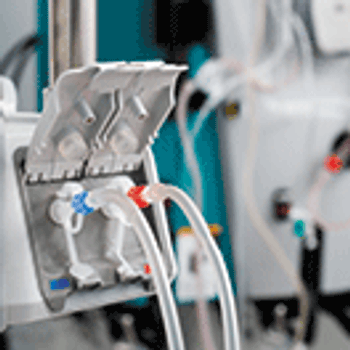
Single-use technologies are starting to gain ground as capacity needs change, but industrywide adoption remains low.
The company will use funding from the Bill & Melinda Gates Foundation to develop a new production method for artemisinin, a therapeutic used to treat malaria.
A Takeda and Denali collaboration includes three named programs for treating Alzheimer’s disease and other neurodegenerative diseases, using Denali’s antibody transport vehicle (ATV) technology to enhance blood-brain barrier penetration.
Athenex is moving forward with the construction of a new 320,000-square-foot pharmaceutical manufacturing facility in Dunkirk, NY, and has hired the German engineering firm, M+W, to design and construct the facility.
The companies aim to discover and develop locked nucleic acid oligonucleotides as orally available therapies for treating inflammatory bowel diseases.
BioPharm International will mark 30 years of biopharma industry progress and challenges in 2018.

Gene therapies highlight FDA new drug approvals in 2017.
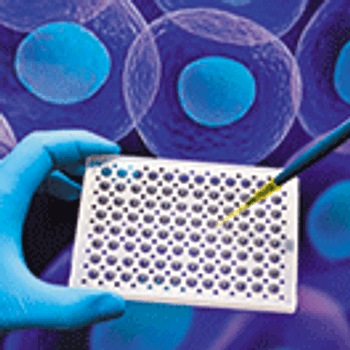
Recent investments show expansion activity in cell culture facilities.
The partnership aims to develop and commercialize a skin-care drug candidate being developed to treat actinic keratosis, which, left untreated, can progress to cancer.
The new 30,000-L, $150-million biologics manufacturing facility in Wuxi, China, quintuples the company’s existing manufacturing capability.
The company will expand two of its Ohio facilities, investing approximately $145 million to support manufacturing and warehouse operations.
Lonza has entered into strategic license agreements for exclusive rights to a gene-therapy platform for developing treatments for hearing and balance disorders.
The joint venture will focus on the discovery, development, and commercialization of potential new drugs for the global market as well as speed delivery of new medicines to China.