




The agency announced that differences in strength expression on product labels of compounders and conventional manufacturers may lead to dosing errors.
The agency announced that differences in strength expression on product labels of compounders and conventional manufacturers may lead to dosing errors.
The agency has entered into an agreement with the National Academies of Science, Engineering & Medicine and has expanded agreements with the University of Maryland and Johns Hopkins University Centers for Regulatory Science and Innovation to conduct research on the compounding of drugs.
The National Institute for Health and Care Excellence recently rejected National Health Service’s funding of Kymriah for diffuse large B-cell lymphoma (DLBCL) despite recognizing that the drug has significant clinical benefits.
The European Medicines Agency’s detection of a second nitrosamine in a sartan API is driving a deeper dive into tetrazole chemistry; root-cause investigations will now include not only valsartan and losartan, but candesartan, irbesartan, and olmesartan.
Winners for each category will be revealed at the CPhI Pharma Awards Gala, taking place on Oct. 9, 2018.
The European Medicines Agency’s (EMA) Committee for Medicinal Products for Human Use (CHMP) has recommended 13 new medicines for approval, including three orphan drug candidates.
FDA awarded nearly $3 million in grants for continuous manufacturing and other advanced manufacturing technologies as part of the agency’s efforts to ensure a robust and reliable supply of biological products.
Research by Thermo Fisher Scientific and LumaCyte suggests that LumaCyte's Radiance instrument offers the ability to rapidly analyze viral vaccines to speed development and production and ensure their effectiveness.
The European Medicines Agency has recommended Luxturna (voretigene neparvovec) as the first treatment option for hereditary retinal dystrophy with mutations of the RPE65 gene.
The CHF 400-million (US$416-million) investment in Lonza's biopark in Visp, Switzerland, will expand Ibex Solutions with two new offerings, drug substance development and drug substance and drug product manufacturing.
The agreement now includes 15 European Union (EU) member states.
The company announced it is creating a new Primary Care global business unit and a China & Emerging Markets unit.
The agency will review Praluent (alirocumab) Injection, a PCSK9 inhibitor, as a possible treatment of cardiovascular events.
The contract development and manufacturing organization expanded its analytical chemistry suite and added a new office in Boston, MA.
The company will be presenting at CPhI Worldwide on Oct. 11, 2018.
BeiGene is set to build late-stage clinical and commercial production capacity for cancer monoclonal antibodies with GE Healthcare’s KUBio, the prefabricated biopharma facility based on single-use technologies.
The biopharmaceutical company will invest approximately $800 million to expand facilities and manufacturing capacity at its campus in Rensselaer County, NY.
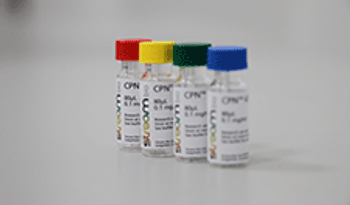
The companies have partnered to launch Conjugated Polymer Nanoparticle (CPN) products for use in molecular imaging and R&D applications.
The drug particle engineering and nanotechnology company offers a nanotechnology platform that can revive failed drugs in the pharma pipeline.
PCI Pharma Services and CSP Technologies will partner on protective packaging solutions for clinical trials and stability testing.
Colin Clarke, from the National Institute for Bioprocessing Research and Training, will lead a four-year European Industrial Doctoral Program for enhancing upstream biopharmaceutical manufacturing process development through single cell analysis.
FDA sent a warning letter to Lernapharm (Loris) Inc. detailing the company’s lack of procedures to prevent microbiological contamination.
In the second half of CPhI’s annual report, experts review industry trends and warn that trade and patent changes could increase healthcare cost by $100 billion over the next five years.
The provider of plant-based ingredients will present recently launched multi-compendial materials for upstream and downstream biopharmaceutical applications.
Researchers at Vanderbilt University Medical Center have isolated the first human monoclonal antibodies (mAbs) that can neutralize norovirus, a virus that causes acute gastrointestinal (GI) illness.
Researchers from Ruhr-Universität Bochum in Germany and the National Institutes of Health modified the protein Nurr1 to enter cells from the outside, possibly enabling the protein to become a drug development candidate for illnesses such as Parkinson’s disease.
The companies will develop therapies targeting the in-vivo elimination of hepatitis B virus (HBV) with Precision’s proprietary genome editing platform.
Avara Pharmaceutical Services acquired Sandoz’s sterile manufacturing facility for injectable medicines in Boucherville, Quebec, Canada.
FDA testing has found an additional impurity, N-Nitrosodiethylamine, in the API valsartan.
The agency approved AstraZeneca’s Lumoxiti (moxetumomab pasudotox-tdfk) injection for intravenous use for the treatment of adult patients with relapsed or refractory hairy cell leukemia.