

Feature|Videos|July 3, 2024
Public Perception and Communicating the Potential and Safety of mRNA
Experts discuss the critical need for cultivating public trust as mRNA technology makes promising advancements in treating a range of diseases.
Advertisement
Episodes in this series

Peter Marks, MD, PhD, stresses the need for the scientific community to clarify to the public that the rapid development of COVID-19 vaccines did not compromise safety protocols. Constanze Blume, PhD, agrees, noting that healthcare professionals and authorities should educate the public on the safety and efficacy of mRNA therapies. Fouad Atouf, PhD, focuses on several aspects of public communication, including safety, efficacy, and addressing misinformation, and points out the opportunity to leverage lessons from the COVID-19 vaccines to illustrate the public health benefits of mRNA technology. Kenneth Chien, MD, PhD, highlights the broad applicability of mRNA for various diseases, while acknowledging that the technology is still in its early stages, with much work to be done until its full potential can be realized.
Discussion Topics
- 0:00:08 - Communicating the safety and efficacy of mRNA technology to the public, addressing misinformation, and highlighting the public health benefits
- 0:02:32 - The importance of healthcare professionals and authorities in educating the public on the opportunities and safety of mRNA therapies
- 0:03:40 - The potential of mRNA technology, the need for further advancements, and drawing analogies to the IT sector
- 0:05:36 - The safety and delivery of mRNA vaccines and therapeutics, and the potential for streamlining regulatory pathways for rare disease applications
Advertisement
Related to this article

A real-world study found evolocumab cut fatal or nonfatal heart attack risk 20% vs ezetimibe in adults with ASCVD and prior statin use.

FDA grants accelerated approval to Johnson & Johnson’s subcutaneous EGFR/MET bispecific Rybrevant Faspro for previously treated head and neck squamous cell carcinoma, T-Therapeutics raises a $133 million Series B to take TCR-CD3 bispecifics into clinical trials, and Alethio Therapeutics raises a $90 million Series A to advance its first-in-class G6B antibody for essential thrombocythemia.

Johnson & Johnson's amivantamab (Rybrevant Faspro) won accelerated FDA approval for pretreated recurrent head and neck cancer.
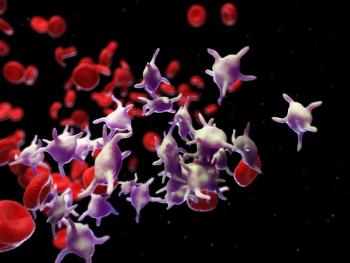
Oxford spinout Alethio Therapeutics closed a $90 million Series A to take ATX-011, a monoclonal antibody against the G6B receptor, into Phase 1/2a studies in essential thrombocythemia. It is also developing a G6B-targeted ADC for myelofibrosis.
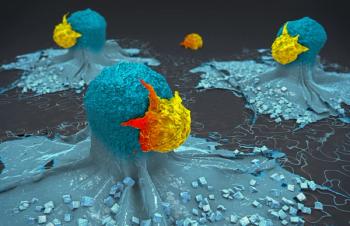
T-Therapeutics closed an oversubscribed $133 million Series B backed by Eli Lilly, JJDC, and others. The funding will take its first T-cell receptor bispecifics in cancer and autoimmune disease into clinical trials.
China’s NMPA grants priority review to Akeso’s PD-1/VEGF bispecific ivonescimab with chemotherapy for first-line biliary tract cancer, VeonGen Therapeutics aligns with FDA on a phase 3 design for its dual-AAV Stargardt gene therapy VG801, and Caldera Therapeutics’ IL-23p19×TL1A bispecific CLD-423 shows a half-life of more than 40 days in a phase 1a trial.

FDA’s draft framework would let sponsors add patient-specific genome editing variants to an approved BLA using in vitro data. Here is what the guidance proposes, what evidence it asks for, and what remains unresolved.

Healthy-volunteer data show sustained TL1A suppression and a profile supporting infrequent subcutaneous dosing. Caldera also licensed a second bispecific, targeting IL-17 and TL1A, from Qyuns Therapeutics.
Advertisement
Advertisement
Trending on BioPharm International
1
Spyre’s Anti-TL1A Antibody SPY072 Misses in Psoriatic Arthritis and Axial Spondyloarthritis, Shifts Focus to Hidradenitis Suppurativa
2
Boehringer Ingelheim Licenses Six Preclinical ADC and T-Cell Engager Programs From SBP Group in Deal Worth Up to $7 Billion
3
The BioPharm Brief: Ivonescimab Priority Review in China, Stargardt Gene Therapy Moves Toward Phase 3, and Longer Dosing Intervals for an IBD Bispecific
4
Caldera’s IL-23p19×TL1A Bispecific CLD-423 Shows 40-Day Half-Life in Phase 1a, Supporting Dosing Every 8 to 12 Weeks
5