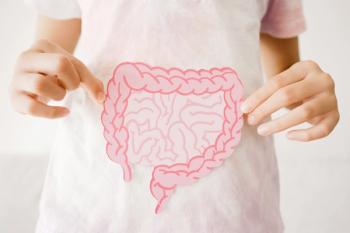
In the phase 3 SHINE-2 trial, half of pediatric patients who responded to mirikizumab induction were in clinical remission at week 52. Lilly plans to file for a pediatric UC label expansion.
The media, by Tosoh Bioscience, is composed of calcium and phosphate buffers and offers mixed-mode properties for biomolecule purification.
Tosoh Bioscience’s Ca++Pure-HA resin, a hydroxyapatite (Ca10(PO4)6(OH)2) chromatography media composed of calcium and phosphate, offers mixed-mode properties for the purification of biomolecules. The formation of both the Ca++Pure-HA ligand and the base bead is created simultaneously from the same source of materials. The resin’s highly selective nature often separates proteins otherwise shown to be homogeneous by electrophoresis and other chromatographic techniques, offering the flexibility of use at any stage in a process, from capture to final polishing, according to the company.
The Ca++Pure-HA resin is best suited for applications associated with the separation of biomolecules, key applications including the purification of monoclonal and polyclonal antibodies-such immunoglobulin G (IgG), IgA and IgM, and IgG Fab regions-the purification of antibody fragments, the isolation of single-stranded from double-stranded DNA, and the purification of fusion and phosphoproteins.
The resin has been sintered at high temperatures for increased mechanical and pH stability, allowing it to withstand the rigors of industrial-scale applications, and CaâºâºPure-HA has a demonstrated dynamic binding capacity (DBC), at 5% breakthrough, of 55 mg monoclonal antibody (mAb)/mg resin at five-minute residence time.
Ca++Pure-HA media is effective for the removal of dimer and higher-order aggregates from purified mAb samples. When Ca++Pure-HA media is operated using potassium phosphate buffer as a loading buffer and potassium chloride as an elution buffer, the aggregate content is reduced from 6.6% to as low as 1.3%.
Source: