


Sponsored
The panel covers the benefits and challenges of a unified government pandemic response, focusing on transparency and trust-building.
Chris Spivey is the editorial director of BioPharm International.
Sponsored
The panel covers the benefits and challenges of a unified government pandemic response, focusing on transparency and trust-building.
Sponsored
Lessons from the COVID-19 response highlight regulatory collaboration, research expansion, and challenges in vaccine access and preparedness.
Sponsored
The panelists introduce themselves and outline key aspects of pandemic preparedness, emphasizing global collaboration and coordinated responses.

Sponsored
Addressing manufacturing at scale for ATMP’s. Reducing costs through reducing batch failures and shrinking footprints, and targeting more focused critical quality attributes for potency but also patient efficacy. Reducing regulatory uncertainty in an uncertain environment to increase patient access to life saving cures.
Sponsored
Optimizing analytics, including laser force cytology, with a goal to delivering adaptive manufacturing, full automation and standardized processes, products and patient outcomes.
Sponsored
Looking ahead 5-10 years for in vivo practice. Combined platform and modalities marriages, to bring CGT up to first relapse or consolidation therapies.
Sponsored
Repairing nucleotide abnormalities for rare disease populations as pivotal proving grounds for transformative therapies.
Sponsored
Popular new delivery vectors, and some not fully appreciated like Non-AAV parvoviruses or Herpes Simplex virus. Are we in a transition state, where there is a growing a trend away from Viral Vectors? How do we best regulate CRISPR?
Sponsored
Standardization leading to CGT therapies becoming a standard of care. Importance to outcomes of high-quality starting materials, to reducing batch-to-batch quality, and the possibilities of allogeneic chimeric antigen receptor therapy (CAR-T) successes.
Sponsored
Success and Challenges (Potholes) in Cell and Gene Therapy: automation, regulatory certainty, and standardizing manufacture processes such as vector constructs or Clustered Regularly Interspaced Short Palindromic Repeats (CRISPR) steps.
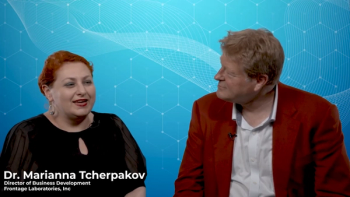
Frontage Laboratories' Marianna Tcherpakov, PhD, director of Business Development, CMC Services, discussed the CDMO’s role in enabling startup biotechs solve complex technical challenges for scale up.
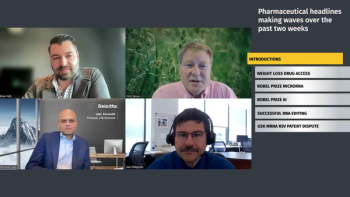
Laks Pernenkil, Brian Feth, and Alex Philippidis go behind the headlines to discuss the impact of recent news, including FDA’s drug shortage list update, Nobel prize winners in microRNA and AI, and a big-potential research win for RNA editing.
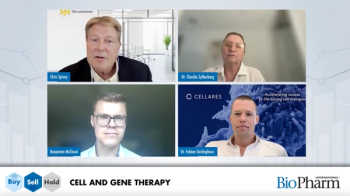
Cell and gene therapy experts Fabian Gerlinghaus, Dr. Claudia Zylberberg, and Benjamin McLeod weigh in on hot topics in CGT.
Cell and gene therapy experts Fabian Gerlinghaus, Dr. Claudia Zylberberg, and Benjamin McLeod weigh in on hot topics in CGT.
Cell and gene therapy experts Fabian Gerlinghaus, Dr. Claudia Zylberberg, and Benjamin McLeod weigh in on hot topics in CGT.
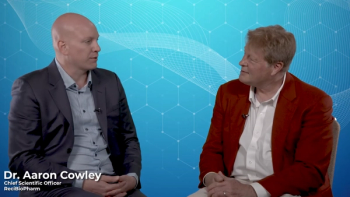
During Bio 2024, Aaron Cowley, PhD, chief technical officer and co-founder, Captozyme, discussed the advancement in development of microbiome-derived therapeutics.

This Behind the Headlines news roundup panel discussion on recent news items includes updates regarding sickle cell therapies (e.g,, Pfizer’s withdrawal of Oxbryta and Vertex’s choosing of Lonza as the commercial manufacturer of Casgevy); Emergent BioSolutions $400 million BARDA contract for an mpox vaccine; and the first in a generation novel schizophrenia drug, Cobenfy (xanomeline and trospium chloride). The panel also examines investment revival with ARCH Ventures $3 billion biotech fund raise and the $3.6 billion for Flagship Pioneering. Rounding things out is a discussion on COVID-19-associated childhood myopia and patent thickets artificially keep the price of drugs high.

This premiere episode of Sexy Science in Pharmaceuticals features Professor Jonathan Pokorski, UC San Diego Jacobs School of Engineering, and Dr. James DiNunzio, Senior Principal Scientist at Merck & Co., Inc. in Rahway, NJ, discussing the benefits of hot-melt extrusion.

There is potential to effectively marry the best aspects of mRNA as a modality, to other existing or nascent exciting platforms, such as gene editing.
Under a pilot program initiative introduced by the Biden administration, Aaron Cowley, chief scientific officer, ReciBioPharm, talked about the ongoing progress in developing continuous manufacturing for mRNA.

Ecolab's Hayley Crowe, executive vice-president and general manager Global Life Sciences sat down at BIO 2024 to discuss technology innovations and how they have enhanced downstream bioprocessing.
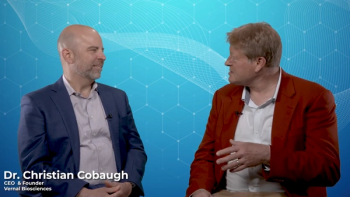
Christian Cobaugh, CEO and founder of Vernal Biosciences, considers the outsourcing landscape for mRNA production.
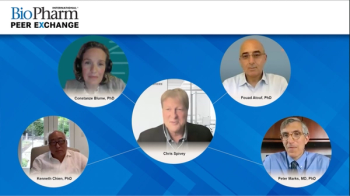
Sponsored
The panel highlights the need for continued research, collaboration between stakeholders, and a strategic approach to leveraging mRNA's capabilities to address unmet clinical needs.
Sponsored
The key to advancing mRNA therapeutics lies in developing more efficient and versatile delivery systems that can overcome challenges around stability, targeting, and safety.
Sponsored
The discussion covers the challenges of optimizing mRNA therapies, including the diverse behaviors of mRNA in biological systems, as well as the opportunities presented by emerging mRNA technologies like circular and self-amplifying RNAs, and the role of regulators in ensuring quality control of these novel products.
Sponsored
The discussion explores how the principles of Operation Warp Speed can be applied to expedite rare disease therapeutic development through a new FDA pilot program aimed at streamlining the drug development process.
Sponsored
The panel discusses the rapid development of mRNA vaccines, the opportunities for mRNA technology to revolutionize drug discovery and gene therapy, and the need for regulatory collaboration to enable efficient review and access to these innovative treatments.
Sponsored
Experts discuss the critical need for cultivating public trust as mRNA technology makes promising advancements in treating a range of diseases.
Sponsored
The panelists discuss the advantages of rapid development, versatile applications, and precise dosing, and how they combine to signal a promising future for mRNA therapeutics.

An ASGCT Panel titled Novel Nucleic Acid and Cell-based Vaccines for Cancer highlights promising mRNA personalized cancer vaccine work.